The Brilliant Lynn Cullen

For nearly a year I’ve been eagerly awaiting Lynn Cullen’s recently released novel, When We Were Brilliant. When I finally had a chance to read it, I was reminded why she’s one of my favorite historical fiction authors. Not only does Cullen combine immersive storytelling with meticulous research, her ability to present what happened in the past in a way that resonates with modern readers is, as usual, her signature talent. Her characters feel as alive today as they did decades ago.
When We Were Brilliant is biofiction about the iconic photojournalist Eve Arnold and her friendship with one of her most famous subjects, Marilyn Monroe. Eve and Marilyn had a lot in common. Both were trying to set themselves apart in a man’s world, and each made sacrifices, one in order to achieve fame, the other to fully unleash her creative instincts.
It’s easy to think of Marilyn Monroe as an empty-headed blond starlet from the 1950s whose platinum beauty and breathy voice, her figure notwithstanding, made her famous. Such was the image Hollywood sought to portray, for obvious reasons. Sex sold then, just as it does now. But what readers discover through Eve’s eyes by way of Cullen’s deft hand is a more complex Marilyn Monroe.

For most of us, Eve Arnold is a less well-known figure. In terms of background and personality, she couldn’t have been more different from Marilyn. Cullen reveals the professional Eve behind the lens alongside the private Eve, a woman torn between society’s expectations and her need to express herself through photography.
As if the lives of these two formidable women weren’t interesting enough, framing this fascinating story of Eve and Marilyn is the waning decade of Hollywood’s Golden Age and the rise of women in the workplace. Some of what we read feels predictable: the iron grip of the male hierarchy, sexism, and the doubt women face as their role in society changes. After all, the story unfolds during the 1950s, and Cullen’s world building accurately reflects the reality of the era.
The storyline, however, feels completely fresh, in part because of the narrative technique Cullen uses to intertwine Eve’s and Marilyn’s stories. Eve tells her story as if she’s speaking to Marilyn, bringing both of their voices to life on the page.
“This was Eve’s love letter to Marilyn.” Lynn Cullen
Second-person point of view is less common in novels. In an episode on the History Through Fiction podcast, Cullen said she fell into the POV by accident. She had been writing in Eve’s first-person point of view until halfway through the book when, she says, “I made a mistake when I was typing away. I referred to ‘Marilyn’ instead of ‘she’ when Eve was thinking of her. I referred to ‘her’ as ‘you.’” Cullen thought to herself, “That feels really right.” So she went with it. I think the choice was, well, brilliant.
The novel opens in 1980. Marilyn has been dead for decades, and Eve is looking back on their friendship. Her memories are painful, but she cannot resist revisiting them. She misses Marilyn and wonders what her life would have been like had the two never met.
In Chapter One, their relationship begins in real time as the year shifts to 1952 when Eve meets Marilyn for the first time at New York’s legendary 21 Club, a 1930s Prohibition-era speakeasy that evolved into a glamorous hangout for the stars in the 1940s and fifties. When Eve excuses herself to go to the ladies’ room, Marilyn follows and asks Eve to photograph her. By this time in Eve’s career, her photos are earning critical recognition. Marilyn says she likes how Eve had photographed Marlene Dietrich and wants Eve to do the same for her, “something different,” Marilyn says. Reluctantly, Eve accepts.

It’s worth noting that while Marilyn plays a supporting but significant role in When We Were Brilliant, the narrative is firmly Eve’s. In Chapter Two, Cullen takes readers further back, to 1941, when Eve meets her husband, Arnold, a German immigrant. The two marry and pursue separate, hopeful careers.
Before long, however, trouble brews. During the forties and fifties, society expected women to stay home and raise children. So did Mr. Arnold. Eve has a different plan in mind; she’s inexplicably drawn to photographing people and life as she sees it. Her passion is palpable.
To succeed as a photographer, however, she has to claw her way up, around, and through the male hierarchy at work, while contending with the limiting expectations of a jealous husband at home. She is a mother as well, having to balance the duties of raising a child while juggling the demands of a rigorous professional career that takes her across the country to photo shoots.
Marilyn faces challenges similar to Eve’s. But the men in Marilyn’s orbit who vie to control her, the unforgiving limelight of the stage, and a haunted past trip up this actress the world can’t get enough of. There to catch her—when she can—is Eve, woman to woman.
So Who Was the Real Eve Arnold?
Born in Philadelphia in 1912, Eve Arnold was the daughter of Russian-Jewish immigrants. Though she had been intending to pursue a medical career, when someone gave her a camera as a gift, her interests shifted to photography. During World War II, she worked in a photo-finishing factory where she met a German immigrant who would become her husband. Together they had one son.
After the war, Eve attended the New York School for Social Research, where her photos caught the attention of the art director at Harper’s Bazaar magazine. For a course assignment, she selected Harlem fashion as her subject. Her photos were good enough to publish. But no magazine in America at the time would cover Black fashion, so she sold her photos to a London magazine. The year was 1951.
Over the next few years, Eve paid her dues by taking photos and selling them wherever she could. When Magnum Photos, a renowned worldwide photographic cooperative whose express purpose was to chronicle world events hired her as a “stringer,” her work gained new visibility and ultimately greater credibility. In time she became a full partner at Magnum.
By not limiting herself to a single publishing outlet, Eve could choose what and whom she photographed. She had a knack for uncovering her subjects’ true essence. Her approach: by caring about the people she photographed, she believed they would give her the best of themselves. She also avoided studios and relied on natural light, which gave her photos a unique, unfiltered realism.
“If a photographer cares about the people before the lens and is compassionate, much is given. It is the photographer, not the camera, that is the instrument.” Eve Arnold
Marilyn Monroe was just one of Eve’s famous subjects. She photographed the likes of Elizabeth Taylor, Marlene Dietrich, Clark Gable, Richard Burton, and Orson Welles. She even photographed Queen Elizabeth II and Margaret Thatcher.
Eve didn’t only photograph the rich and famous. Her photos in Life magazine are among her most memorable, including “A Baby’s First Five Minutes,” a photo essay showing a live birth in 1959. I remember seeing those photos when I was very young and can still picture the images. They were as groundbreaking as Eve. Public conversations about birth were taboo at the time; Eve helped change that.
In 1962 Eve moved to London, where she lived for the rest of her life. Her continued work in photojournalism took her all over the world, including to places like China, Afghanistan, South Africa, and the former Soviet Union. She photographed life as she saw it: pure, raw, and self-revealing. The recipient of multiple awards, today her photographs are exhibited in museums across the globe.
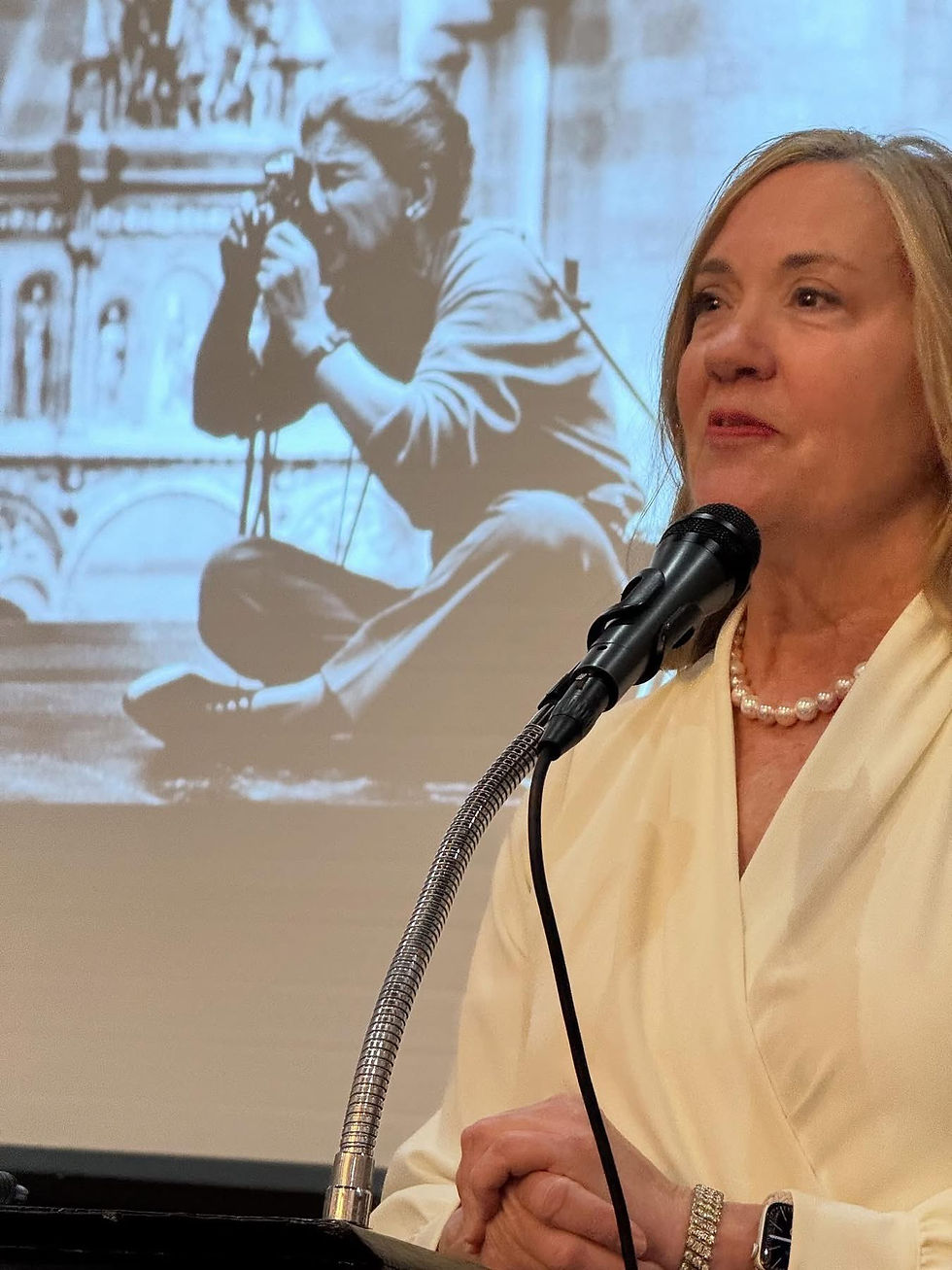
Eve also authored multiple books on photography. In 1987 she published Marilyn Monroe: An Appreciation, in which she shared her most intimate and candid photos of Marilyn, along with details of their relationship. The book is considered one of the best photographic collections of Marilyn. In it Eve offers a more sympathetic view of Marilyn and what ultimately may have led to her untimely death. Eve died at age 99 in 2012.
I heartily recommend When We Were Brilliant. The novel does more than entertain readers; I learned a great deal about both women. Prior to reading it, I didn’t know much about Marilyn Monroe. She wasn’t a public figure to whom I was drawn. Admittedly, I saw the stereotype. Shame on me. Thanks to Cullen, I see Marilyn differently now. She was much smarter than she has been given credit for, and I see her demons, which I didn’t know existed. Understanding what she had to rise above, I have a new empathy for her and a genuine respect for what she accomplished.
I see Eve Arnold in the way I always see remarkable women from the past: as people who cleared the path for modern women to pursue their passions. What reading about Eve has done, however, is to remind me how hard it was for pioneering women to be seen and to compete alongside men when everything was stacked against women. I don’t think modern women can fully appreciate how much more effort it took, how much more persistence was required for women like Eve to succeed in their field. She didn’t let barriers prevent her from rising. She didn’t wait for someone to hand opportunity to her. She didn’t apologize for being bold. As a result, her photographs were unequaled then and remain so now.
For more information on Eve Arnold, I invite you to check out the links at the end of this review. I also encourage you to click here for my review of The Woman With the Cure, another of Cullen’s novels you may enjoy. The Woman With the Cure is a biographical novel about Dr. Dorothy Horstmann, one of only a handful of women involved in the race for a cure for polio.
And as always, if you’d like to receive my next review of a biographical novel about a famous woman from the past, be sure to subscribe to my blog and newsletter here.
Post sources and additional information on Eve Arnold:
Eve Arnold website: https://www.evearnold.com/
Halcyon Gallery online: https://www.halcyongallery.com/eve-arnold/biography/
Magnum Photos online: https://www.magnumphotos.com/photographer/eve-arnold/
Lynn Cullen on the History Through Fiction Podcast: https://www.historythroughfiction.com/podcast/lynn-cullen
N.J. Mastro is the author of Solitary Walker: A Novel of Mary Wollstonecraft.

